 UK
UK Nigeria
 Benin
Benin Burkina Faso
 Cameroon
 Tchad
Tchad
 RDC
RDC Cote d'ivoire
 Gabon
Gabon Ghana
Ghana Guinea
 Kenya
Kenya Liberia
 Moçambique
 Senegal
 Sierra Leone
 Tanzania
 Uganda
 Zambia
 France
 America
 Mali
Mali UAE
UAE France
Overview
Banking risk frameworks are being tested in ways not seen in over a decade.
From liquidity shocks and interest rate volatility to the rapid emergence of artificial intelligence in balance sheet management, treasury functions are under increasing pressure to adapt – not incrementally, but structurally.
This three-part webinar series provides an opportunity to examine how treasury and risk frameworks must evolve to remain resilient, capital-efficient, and forward-looking.
Each session focuses on a critical pillar of modern banking risk, combining regulatory insight, market experience, and practical implementation considerations.
Who Should Attend
This series is designed for decision-makers responsible for liquidity, capital, and risk strategy.
Heads of Treasury
Chief Financial Officers (CFOs)
ALCO Members
Heads of Risk and Balance Sheet Management
Heads of Financial Institutions
Senior Finance and Treasury Leaders
Series Structure
Part I
Updating Your Liquidity Risk Management Framework
Date: 28 May 2026
Recent market events have exposed structural gaps in traditional liquidity frameworks. This session examines how banks should rethink liquidity risk in light of evolving regulatory expectations and real-world stress scenarios.
Key Themes:
- Lessons from recent bank failures
- Limitations of standard liquidity metrics under stress
- Emerging regulatory perspectives on liquidity risk
- Managing concentration risk within high-quality liquid assets
Part II
Interest Rate Risk in the Banking Book (IRRBB)
Date: 25 June 2026
As interest rate environments remain uncertain, managing both earnings volatility and balance sheet sensitivity has become a central treasury priority.
This session explores practical approaches to implementing regulatory guidance while strengthening internal risk monitoring and governance.
Key Themes:
- Evolving Basel expectations for IRRBB and CSRBB
- Managing earnings and economic value sensitivity
- Strengthening ALCO oversight and decision-making
- Developing effective risk dashboards and reporting frameworks
Part III
Artificial Intelligence and Bank Balance Sheet Management
Date: 30 July 2026
Artificial intelligence is rapidly moving from experimentation to application within treasury and balance sheet management. However, adoption remains uneven and often misunderstood.
This session examines where AI delivers real value — and where it does not — within treasury functions.
Key Themes:
- Practical applications of AI in treasury and ALM
- Identifying genuine productivity gains vs hype
- Integrating AI into existing risk and decision frameworks
- Aligning model design with defined business outcomes
Format
Each session will include:
- Executive framing
- Expert-led discussion
- Practical insights and case perspectives
- Interactive Q&A
About the Speaker
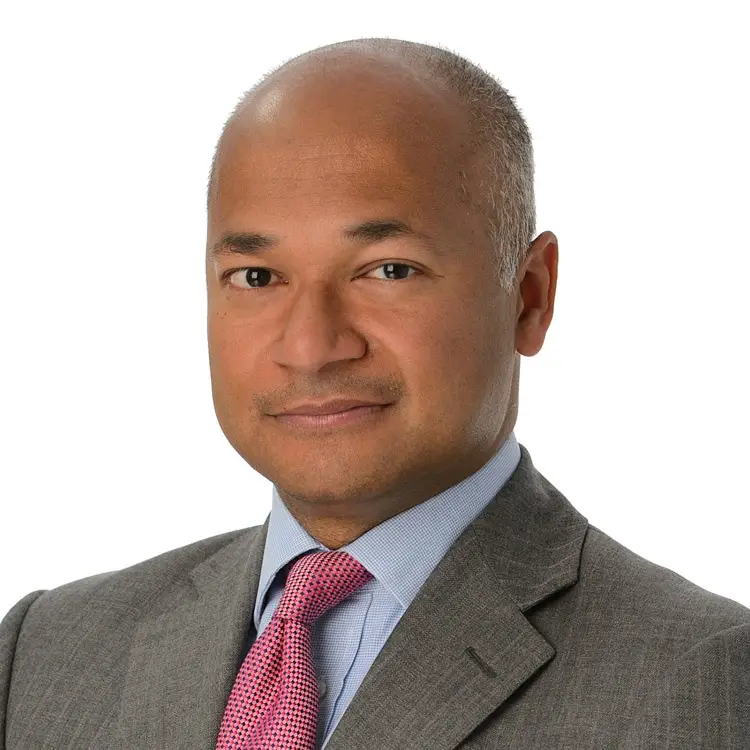
Professor Moorad Choudhry
Professor Moorad Choudhry is an Independent Non-Executive Director and Chair of Risk Committee at SBUK Limited, in London, and Visiting Professor at Birzeit University, Palestine West Bank. He has served as INED at Recognise Bank Ltd, Loughborough Building Society and Wandle Housing Association and was Chair of Audit & Risk Committee at Goldsmiths, University of London. Previously he was Treasurer, Corporate Banking Division at Royal Bank of Scotland, Head of Treasury at Europe Arab Bank, Global Head of Treasury at KBC Financial Products and a vice-president in structured finance at JPMorgan Chase Bank. He began his career at the London Stock Exchange in 1989.
Moorad is a Fellow of the Chartered Institute for Securities & Investment, a Fellow of the London Institute of Banking and Finance, a Fellow of the Global Association of Risk Professionals, and a Liveryman of the Worshipful Company of International Bankers. He is author of The Principles of Banking (John Wiley & Sons 2012, 2023).
Moorad was educated at Claremont Fan Court and University of Westminster. He obtained his MBA from Henley Business School and his PhD from Birkbeck, University of London.
Registration
Register once to attend all sessions or select individual dates.
Download Presentation Slides for Mastering Sheet Resilience
Fill the form to download resources